 Mayumi Goya
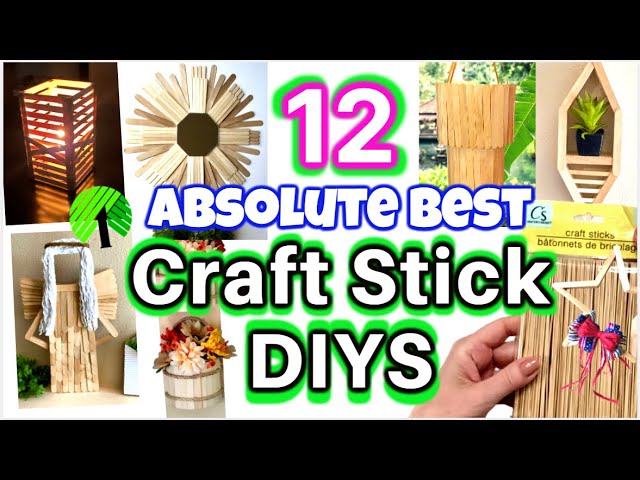
 Craft stick ideas offer a surprisingly versatile avenue for creative expression, providing readily available materials for a wide range of projects. These inexpensive and easily accessible craft supplies inspire countless imaginative creations, appealing to both children and adults. The simple nature of craft sticks allows for easy manipulation and adaptation to various designs, fostering creativity and problem-solving skills. From simple structures to intricate designs, the potential applications are vast and only limited by one’s imagination. Exploring the world of craft stick projects reveals a multitude of possibilities for both artistic endeavors and practical applications.
The inherent simplicity of craft sticks belies their potential for intricate and visually stunning projects. Their lightweight yet sturdy nature makes them ideal for constructing three-dimensional forms, requiring minimal tools and preparation. This accessibility makes them a perfect choice for beginners and experienced crafters alike, providing a low-barrier entry into the world of crafting. The readily available nature of craft sticks reduces the cost barrier associated with more specialized crafting materials, encouraging experimentation and exploration. Furthermore, the potential for personalization and customization through painting, staining, or decoupage opens up a realm of creative possibilities.
The versatility of craft sticks extends beyond simple crafts. They can serve as an educational tool, aiding in the development of fine motor skills and spatial reasoning. They can be used in educational settings to illustrate mathematical concepts, design structural models, or even create unique art installations. The potential for exploration and experimentation allows children and adults to tap into their creativity while also improving hand-eye coordination. Moreover, repurposing readily available materials such as craft sticks promotes environmental awareness and sustainable practices, minimizing waste and maximizing resource utilization. These reusable and recyclable materials offer a responsible alternative to craft materials with larger environmental impacts.
Exploring Diverse Craft Stick Ideas
This section details several project examples using craft sticks, providing step-by-step instructions to help readers create their own unique designs. Each project demonstrates the versatility of craft sticks and their potential for a variety of artistic expressions. These instructions aim to inspire creativity and provide practical guidance for various skill levels, encouraging exploration and experimentation within the world of craft projects. The simplicity of the materials allows for easy adaptation and customization, encouraging individual creativity. The potential to expand upon these designs and create unique variations is unlimited.
Simple Craft Stick Frame
Estimated time: 15 minutes. This project introduces the basic techniques for working with craft sticks. It’s a great starting point for beginners.
- Gather 8-10 craft sticks.
- Arrange sticks in a square or rectangular shape.
- Glue the corners using wood glue.
- Allow to dry completely before handling.
- Decorate with paint, markers, or other embellishments (optional).
Craft Stick Mobile
Estimated time: 30 minutes. This project introduces more advanced techniques including balancing and assembly. It’s suitable for intermediate crafters.
- Create various shapes using craft sticks and glue.
- Paint or decorate the shapes.
- Attach string to each shape.
- Tie the strings to a central ring or stick.
- Adjust the lengths of the strings for balance.
Craft Stick House
Estimated time: 45 minutes. This project combines multiple techniques to build a three-dimensional structure. It’s suitable for intermediate to advanced crafters.
- Construct walls using glued craft sticks.
- Create a roof from craft sticks.
- Add doors and windows using smaller craft sticks.
- Decorate the house using paint and other embellishments.
- Glue the parts together securely.
The remarkable potential for creative expression offered by craft stick projects extends far beyond simple crafts. They provide a sustainable and accessible method for engaging in diverse artistic explorations. The ease with which these projects can be adapted and customized caters to a broad range of abilities and interests, fostering creativity and problem-solving skills. Craft stick projects promote resourcefulness and encourage the repurposing of everyday materials.
The enduring appeal of craft stick projects lies in their simplicity and versatility. They’re an inexpensive and environmentally responsible way to engage in artistic activities, making them a perfect choice for both individual projects and group activities. The wide range of potential designs, from simple to complex, ensures that there is a craft stick project for everyone, regardless of age or skill level. The creative possibilities are truly endless.
Essential Tips for Successful Craft Stick Projects
These tips offer valuable insights to enhance the crafting experience and achieve the best possible results when working with craft sticks. Careful consideration of these points can improve the overall quality and longevity of any craft stick project, enabling a more enjoyable and fulfilling creative endeavor. Paying attention to detail during each stage will significantly impact the finished product’s aesthetics and structural integrity.
Understanding these techniques and approaches ensures a smoother and more satisfying crafting process, leading to greater success and improved results. Following these guidelines promotes efficient and effective use of materials and time, maximizing creative potential while minimizing potential difficulties. Proper preparation and execution lead to more aesthetically pleasing and structurally sound outcomes.
-
Use high-quality wood glue:
Opt for a strong, quick-drying wood glue to ensure secure adhesion between the craft sticks. This prevents the structure from becoming loose or unstable over time. Choose a glue specifically designed for wood applications to enhance its bonding capabilities and prevent any adverse reactions with the wood itself. Applying a thin, even layer promotes optimal adhesion.
-
Clamp projects while drying:
Using clamps helps keep the craft sticks in place while the glue dries, ensuring a strong and secure bond. This is especially important for projects with multiple joints or complex structures where proper alignment is critical. The use of clamps minimizes warping or misalignment during the drying process.
-
Sand rough edges:
Sanding any rough edges after gluing will create a smoother, more finished look. This step improves the overall aesthetic appeal and prevents splintering. Use fine-grit sandpaper to achieve a smooth surface without damaging the wood itself.
-
Pre-treat craft sticks:
Before painting, consider applying a sealant to prevent the wood from absorbing too much paint, leading to a more vibrant and even finish. This also extends the life of the craft and protects it from moisture damage. Proper pre-treatment is crucial for both aesthetics and longevity.
-
Plan your design:
Before starting a project, sketch out your design to ensure a smooth process and avoid any unforeseen issues. This helps visualize the final product and makes the construction process significantly easier. Careful planning ensures efficient use of materials and minimizes errors.
The success of any craft stick project hinges on careful planning and execution, ensuring a satisfying and rewarding experience. Attention to detail throughout the entire process, from material selection to final finishing touches, will yield superior results. Embracing these recommendations helps one refine their craft and unlock greater creative potential. Through mindful practice and thoughtful attention to detail, the transformative power of craft stick projects becomes truly apparent.
The simplicity of craft sticks allows for a diverse range of creative applications, making them an ideal material for exploration and experimentation. The ability to easily customize and personalize these projects makes them suitable for a broad range of tastes and skill levels. This allows for a more enriching and fulfilling crafting experience.
Frequently Asked Questions about Craft Stick Projects
This section addresses common questions regarding craft stick projects, offering clarification and guidance to those embarking on their own creative endeavors. Addressing these frequently asked questions ensures a better understanding of the process and provides practical solutions to potential challenges. The aim is to provide a supportive resource for beginners and experienced crafters alike.
What type of glue works best for craft sticks?
High-quality wood glue is generally recommended for craft stick projects. It provides a strong and lasting bond, essential for structural integrity. Ensure the glue is designed specifically for wood applications to avoid any adverse reactions. Always apply a thin, even layer for optimal adhesion and allow ample drying time before handling.
Can craft sticks be painted?
Yes, craft sticks can be painted using various types of paint, including acrylics, tempera, and even spray paint. However, it’s advisable to apply a sealant before painting to prevent the wood from absorbing too much paint and ensure a smooth, even finish. This also contributes to the longevity and protection of the finished product. Allow adequate drying time between each coat of paint and sealant for best results.
How can I make my craft stick projects more durable?
To increase the durability of your craft stick projects, use a strong wood glue and ensure proper drying time. Consider applying a sealant to protect the wood from moisture and extend its lifespan. Careful planning and precise execution contribute significantly to the project’s overall strength and longevity. Strengthening joints with additional glue or reinforcing materials can also enhance durability.
Addressing common concerns and providing clear answers contributes to a more comprehensive understanding of the crafting process. This fosters greater confidence and empowers individuals to approach their craft stick projects with more assurance. Open communication and readily available information are integral to facilitating a more successful and enjoyable crafting experience. The goal is to equip individuals with the knowledge and skills to overcome any potential obstacles.
The accessibility and versatility of craft stick projects make them a popular choice for both beginners and experienced crafters alike. Their affordability and sustainable nature are further contributing factors to their enduring appeal. The range of possibilities continues to inspire creativity and exploration in the world of crafts.
Key Aspects of Craft Stick Projects
Understanding these aspects provides a foundational understanding of craft stick projects’ versatility and potential. Each component contributes to the overall success and aesthetic appeal of the finished product. The ease of manipulation and adaptability makes craft stick projects suitable for individuals of various skill levels.
Materials
The primary material is readily available craft sticks, often made from basswood. Their inexpensive and easily accessible nature makes them perfect for various projects. The uniformity of the sticks allows for easier construction and repetition of patterns. This readily available material makes craft stick projects widely accessible.
Techniques
Common techniques include gluing, painting, sanding, and decorating. These skills are easily learned and can be adapted to many different project types. The simplicity of these techniques allows for creative exploration and experimentation. The ease of application allows for quick prototyping and iteration of ideas.
Design
Designs range from simple structures to complex 3D models. This variety allows for exploration across various skill levels, from beginner to advanced. The open-ended nature of the medium encourages creativity and problem-solving. A vast array of design concepts is made possible by this readily adaptable material.
Applications
Craft stick projects have diverse applications, including educational tools, decorative items, and functional structures. These applications extend their use beyond simple crafts, promoting creativity and practical learning. The versatility of the medium makes it applicable to various contexts and audiences.
The interplay between materials, techniques, design, and application highlights the multifaceted nature of craft stick projects. The simplicity of the craft belies the limitless possibilities offered by this readily available material. Understanding these aspects allows for more thoughtful execution of projects, resulting in highly creative and satisfying outputs.
The accessibility and versatility of craft sticks allow for a wide array of projects, suitable for various skill levels and ages. The ease of use makes them an ideal medium for fostering creativity and exploring artistic expression. The potential applications are limited only by one’s imagination.
The exploration of craft stick ideas provides a boundless journey into the world of creative expression. The simplicity of the materials and the diversity of projects make this a fulfilling and engaging activity for all ages. The sustainable nature of the materials and the low cost of entry ensure that craft stick ideas are a viable and enjoyable hobby for years to come.
Youtube Video: